
MBA Dream Job: From Promise to Reality – Why a Degree Alone Is No Longer Enough
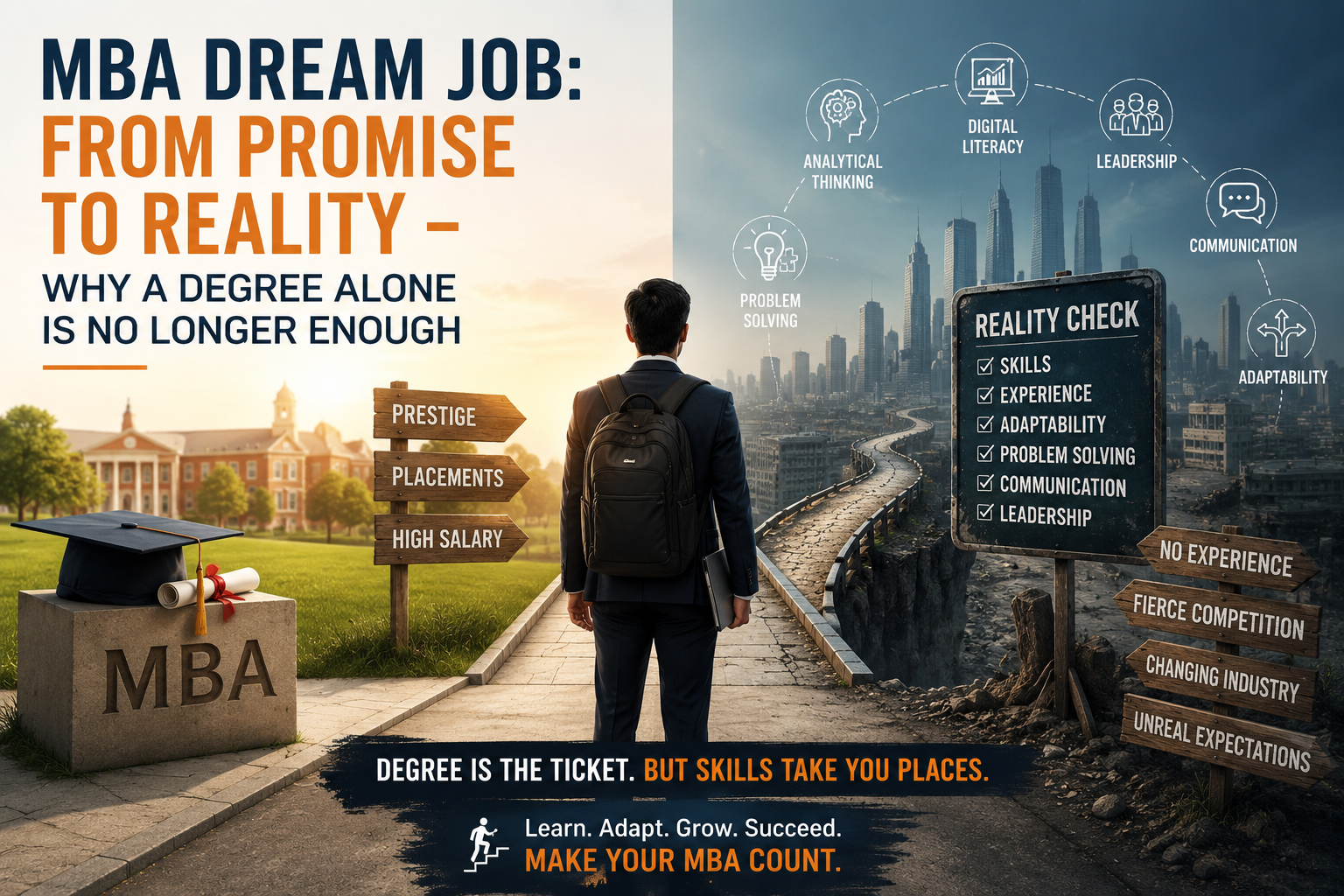
For generations, an MBA has been considered the golden ticket to a successful career.
Students invest significant time, effort, and money with the expectation that an MBA will lead to better opportunities, higher salaries, and faster career growth.
The dream is familiar:
complete an MBA, secure a corporate job, climb the career ladder, and build a successful professional life.
But as thousands of MBA graduates enter the workforce each year, many are discovering a hard truth: earning an MBA and being job-ready are not the same thing.
The business world has evolved dramatically over the last decade.
Organizations today operate in a fast-paced, technology-driven environment where practical skills and business understanding are often valued more than academic qualifications alone.
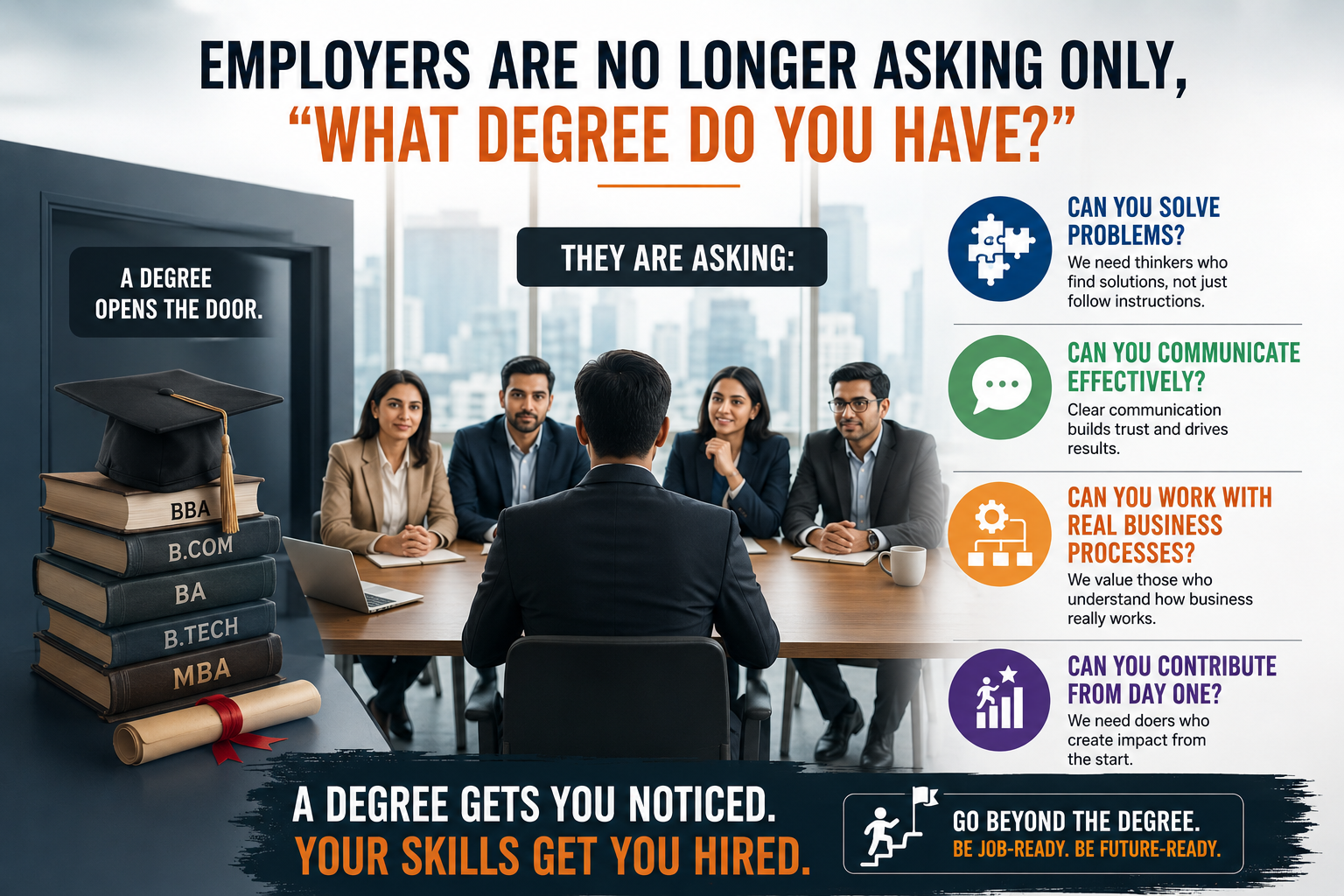
Employers are no longer asking only, "What degree do you have?"
They are asking:
Can you solve problems?
Can you communicate effectively?
Can you work with real business processes?
Can you contribute from day one?
This shift has created a significant gap between what many students learn in classrooms and what companies expect in the workplace.
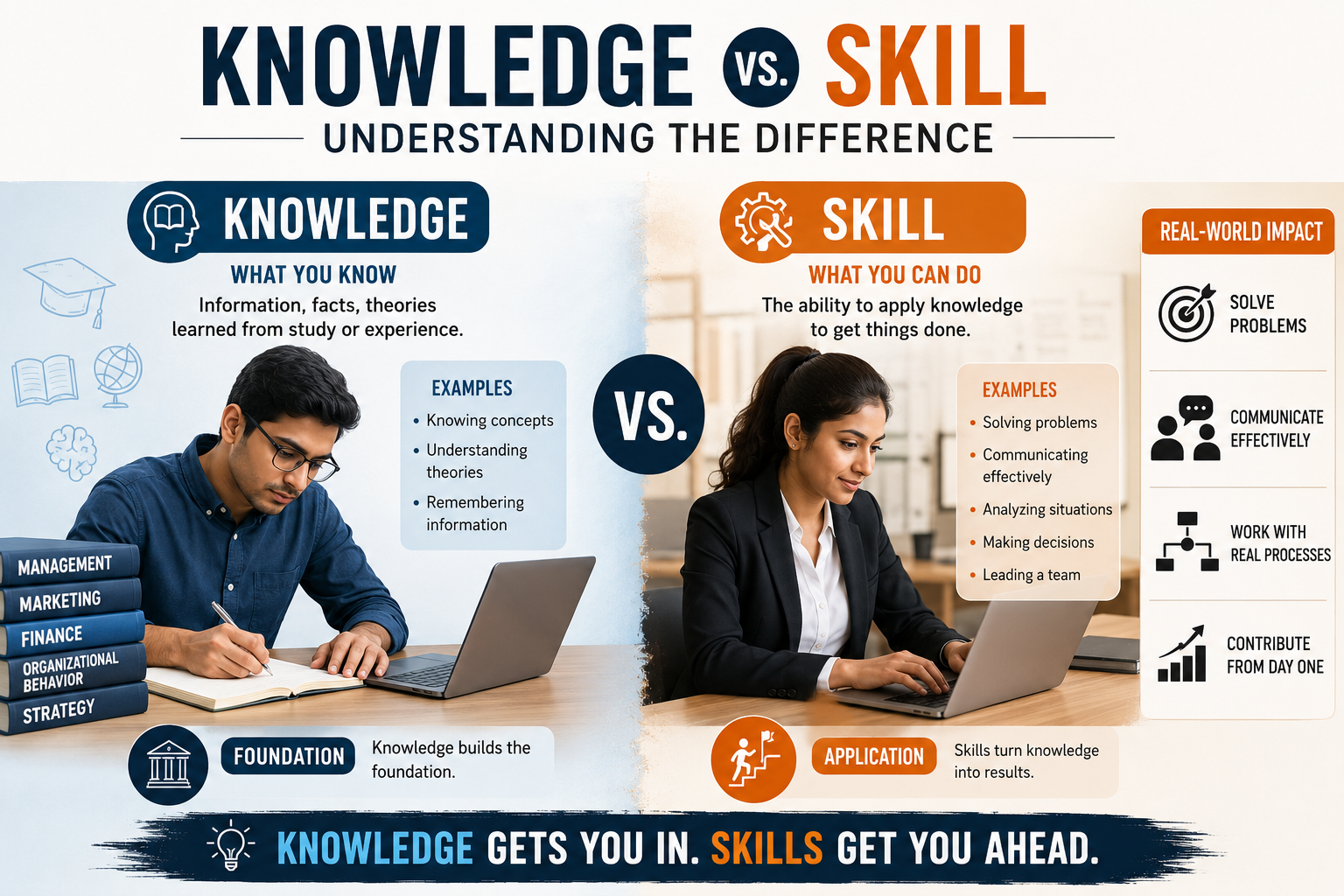
One of the biggest misconceptions among MBA students is confusing knowledge with skill.
Knowledge is understanding a concept.
Skill is the ability to apply that concept in a real-world situation.
For example, a student may study recruitment strategies, sourcing techniques, interview frameworks, payroll concepts, performance management systems, and labour laws during an MBA program.
They may score well in examinations and understand the theory perfectly.
But understanding something and doing it are two completely different things.
You can read about recruitment, but you only learn recruitment when you source candidates, screen resumes, conduct interviews, coordinate with hiring managers, and successfully close positions.
You can study payroll regulations, but you truly understand payroll when you process salaries, handle deductions, manage compliance requirements, and resolve employee concerns.
You can learn about employee engagement in a textbook, but you develop the skill by planning activities, interacting with employees, and addressing workplace challenges.
The reality is simple:
Skills are not built by studying alone. Skills are built by doing.
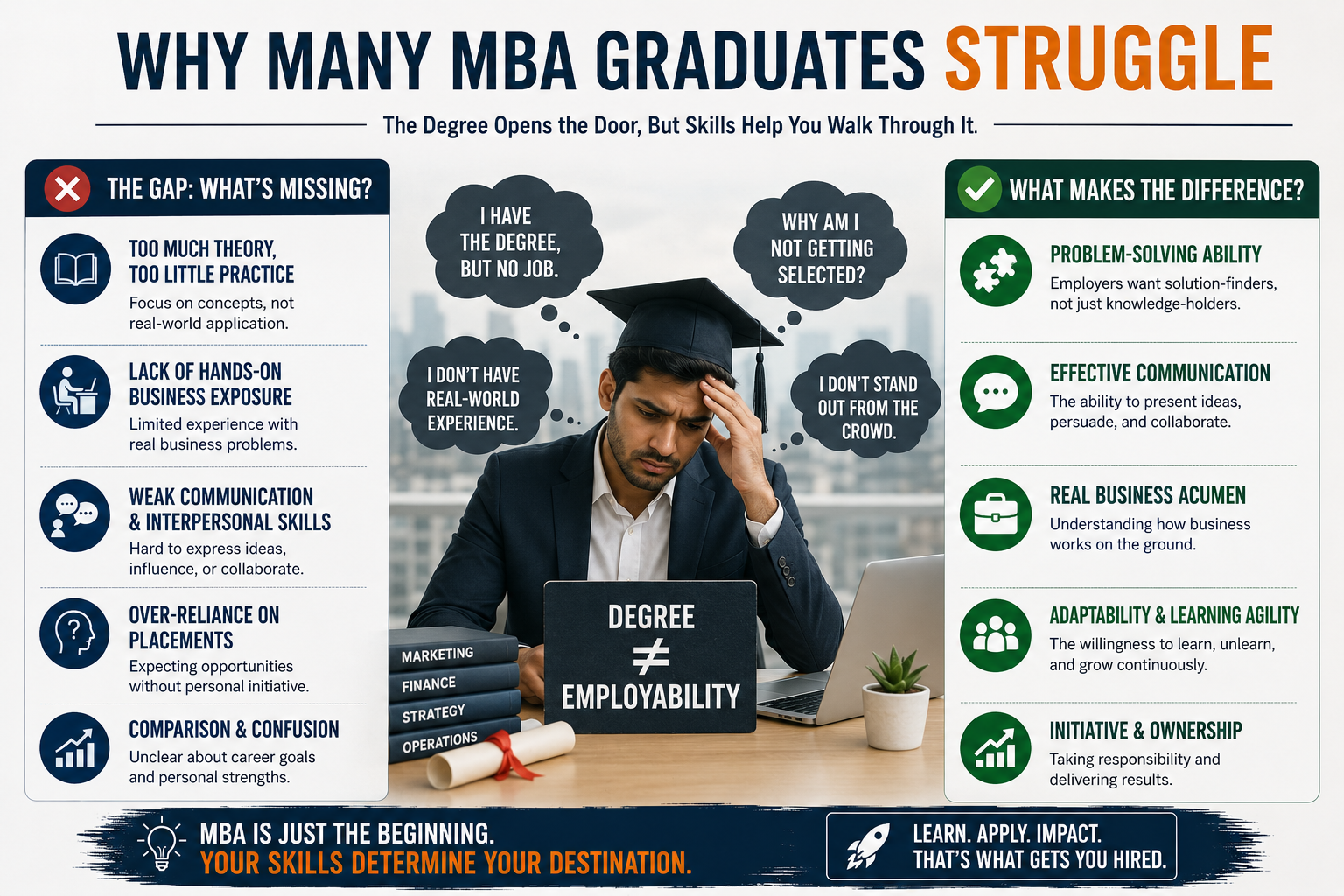
Many MBA graduates enter the job market expecting opportunities based solely on their degree.
However, employers often prioritize candidates who have practical exposure and hands-on experience.
This is why fresh graduates frequently encounter job descriptions that ask for experience, industry knowledge, or familiarity with business tools and processes.
From an employer's perspective, hiring someone who can immediately contribute to the organization reduces training time and increases productivity.
As a result, candidates with internships, live projects, practical certifications, and industry exposure often have a competitive advantage over those who possess only theoretical knowledge.
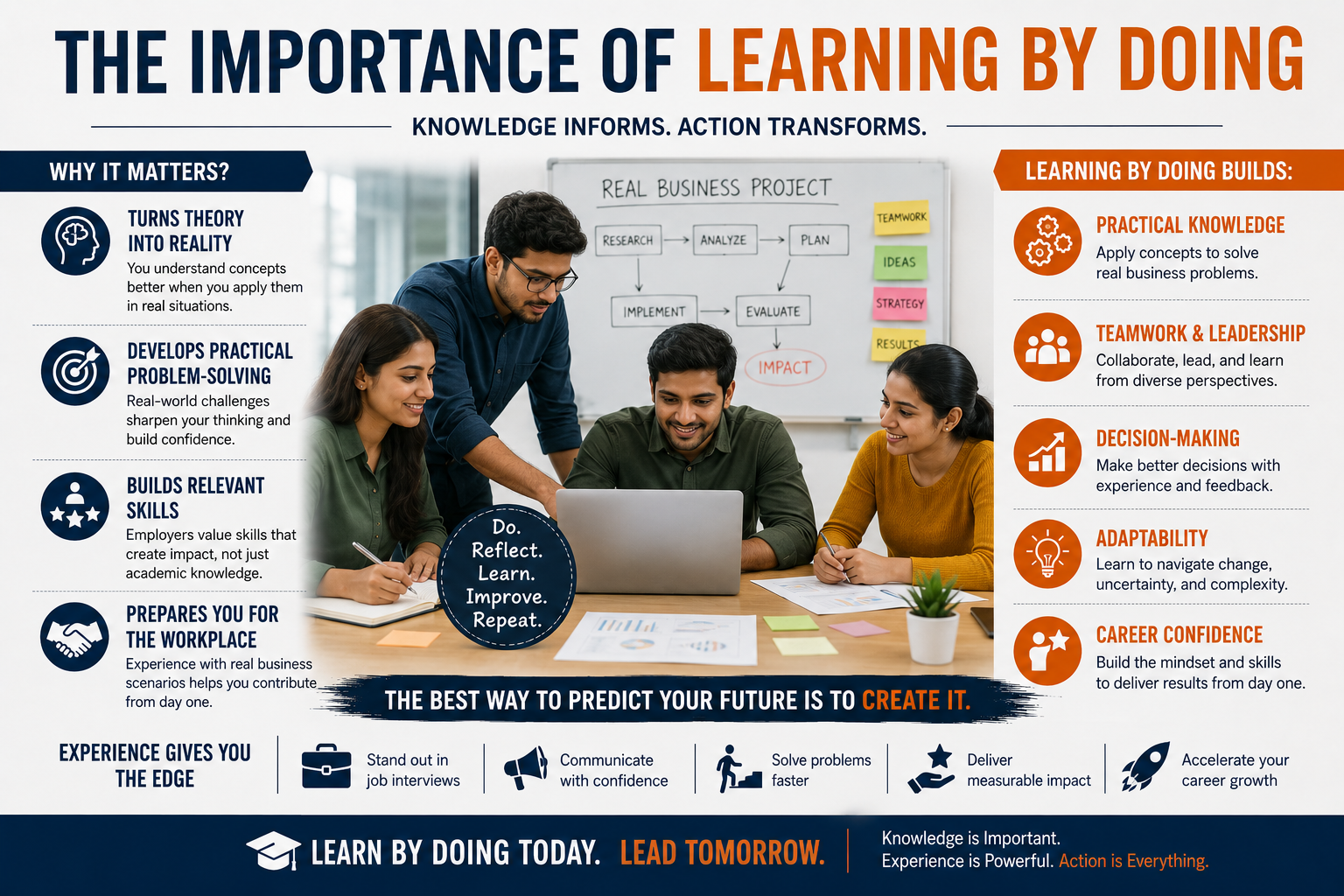
Every profession requires practice.No one becomes an effective manager by reading management books alone.No one becomes an excellent recruiter by studying recruitment theories alone.
No one becomes a successful HR professional, marketer, or business leader without experiencing real workplace situations.
The most valuable lessons are often learned when applying knowledge in practical environments.
These experiences build confidence, decision-making ability, communication skills, and business acumen—qualities that employers actively seek.
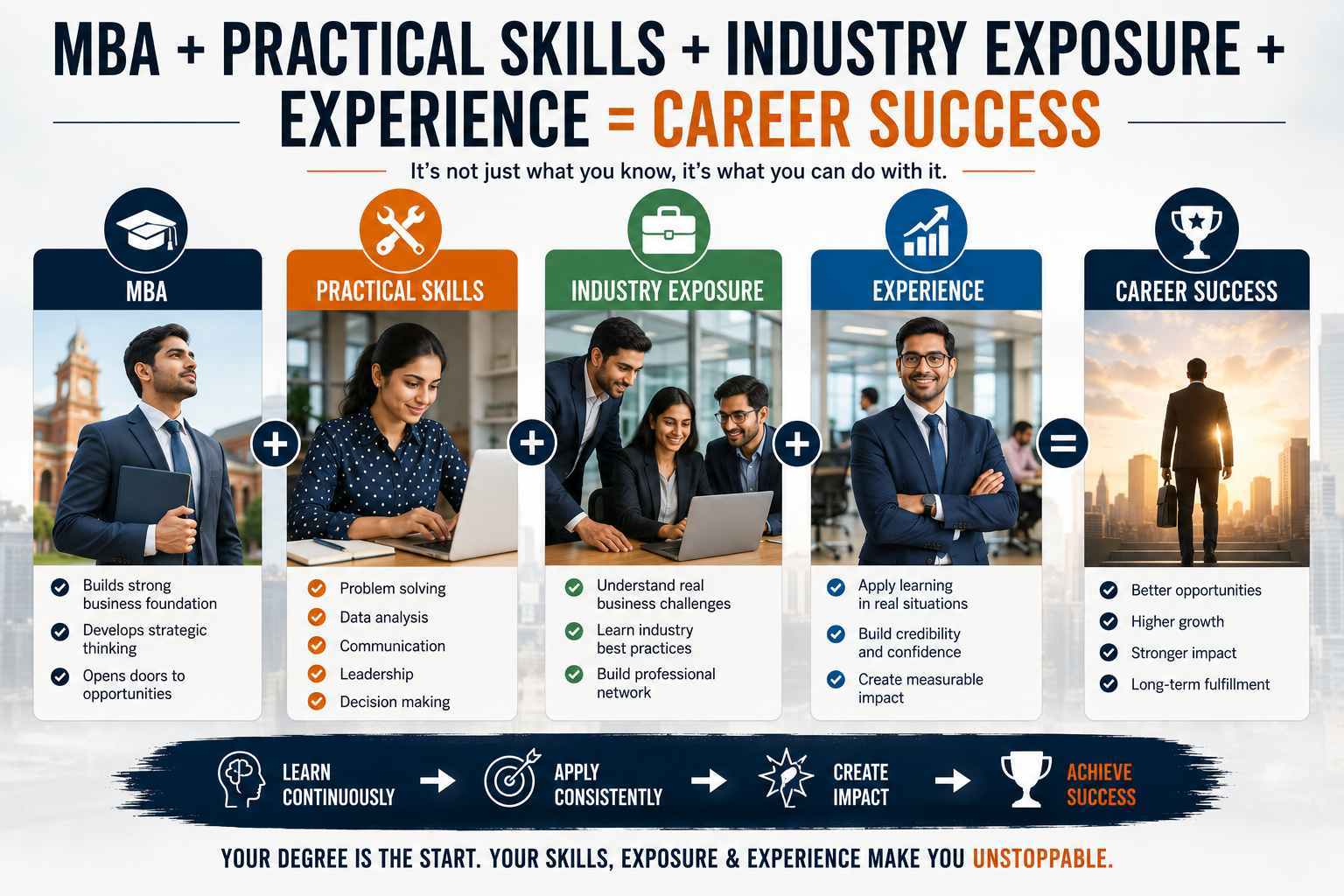
The traditional belief was:MBA = JobToday's reality looks different:
MBA + Practical Skills + Industry Exposure + Experience = Career Success
An MBA continues to provide a strong foundation. However, practical learning is what transforms that foundation into a successful career.
Students who actively seek internships, mentorship opportunities, live projects, and hands-on training gain a deeper understanding of how businesses actually operate.
They don't just know the concepts—they know how to apply them.
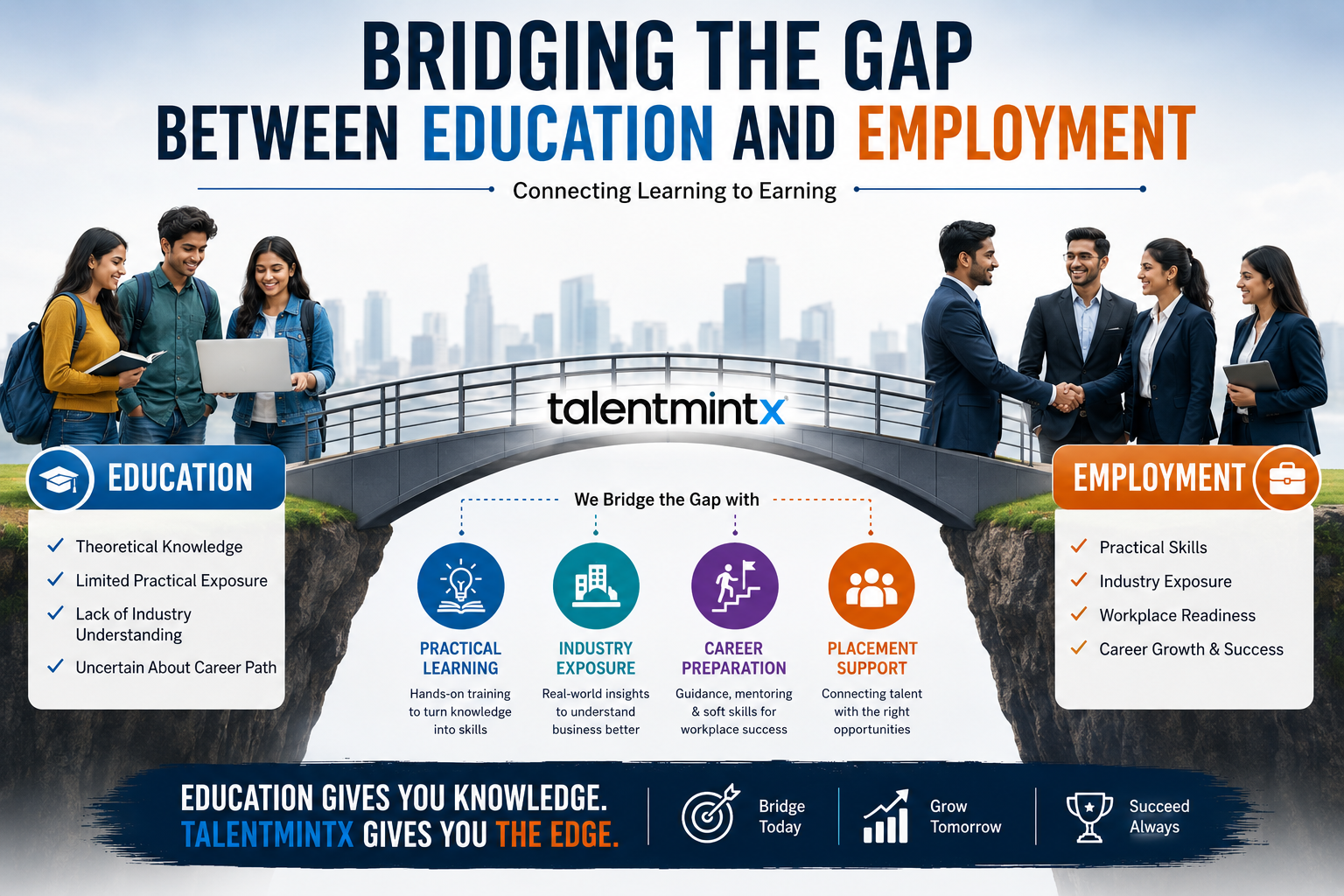
This is exactly why programs focused on practical learning are becoming increasingly important.
At TalentMintX, we have observed that employers consistently value candidates who possess both academic knowledge and practical experience.
The goal is not simply to earn a degree.
The goal is to become industry-ready.
Through mentorship, internships, live projects, and real-world exposure, aspiring professionals can gain the confidence and capabilities needed to succeed in today's competitive job market.
The MBA dream is not an illusion.
The illusion is believing that a degree alone guarantees success.
An MBA can open doors, but practical skills determine how far you go once those doors are opened.
In today's world, employers are looking for professionals who can create value, solve problems, and contribute from day one.
Those abilities cannot be learned solely through textbooks or classroom discussions.They are developed through experience.
You can study a process.
You can understand a concept.
You can memorize a framework.
But you only develop true professional skills when you apply what you have learned in real situations.
Because knowledge tells you what to do.
Experience teaches you how to do it.
And in the modern workplace, that difference can define your entire career.