
India’s Biggest Labour Law Overhaul in Decades: What It Means for Employers, Employees & HR Professionals
India’s biggest labour law overhaul is here. By replacing 29 labour laws with 4 modern codes, the reforms aim to simplify compliance, enhance worker protection, and reshape salaries, benefits, social security, and workplace regulations across the country.
Why Are Labour Laws Being Overhauled?
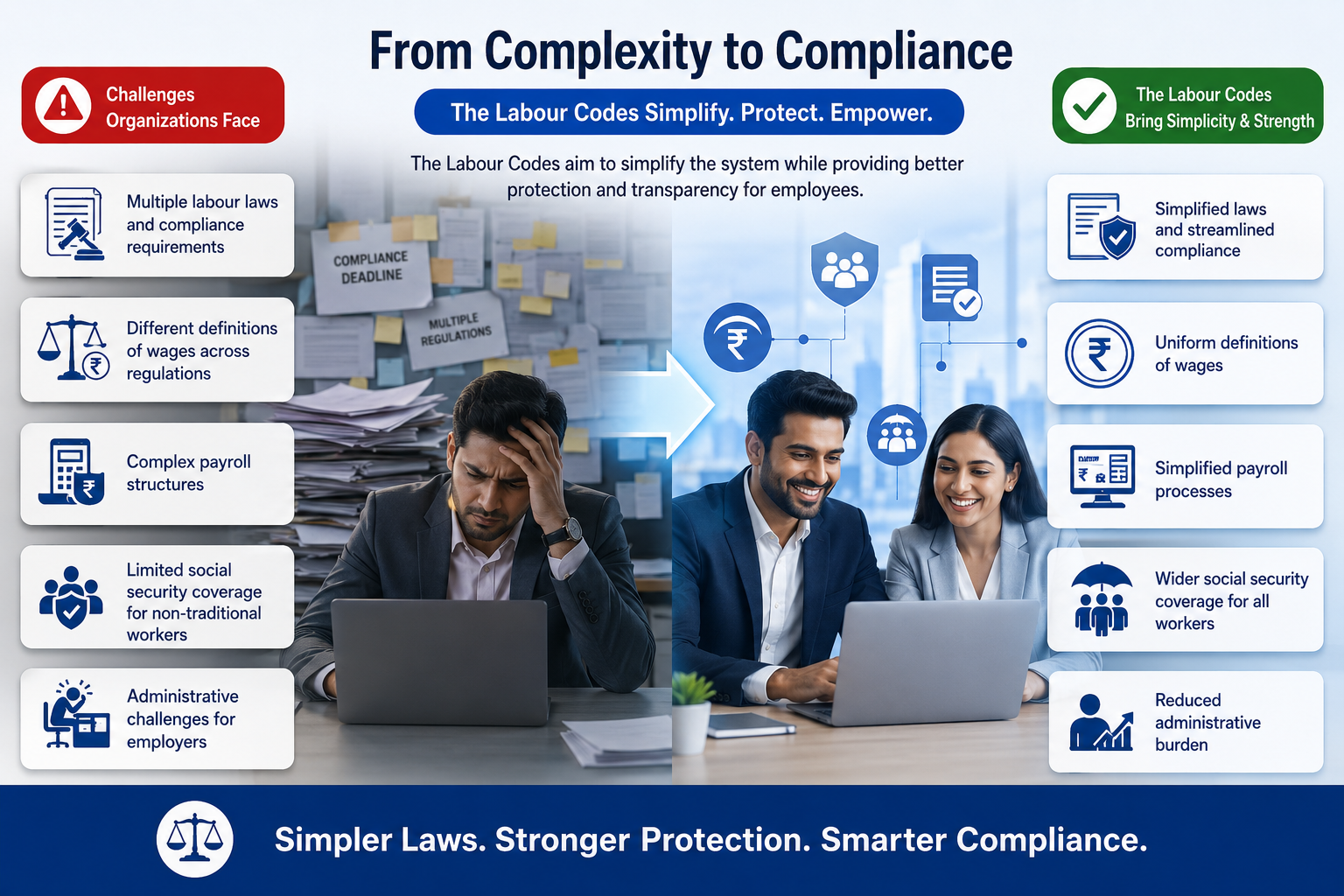
For years, organizations have struggled with:
– Multiple labour laws and compliance requirements
– Different definitions of wages across regulations Complex payroll structures.
– Limited social security coverage for non-traditional workers
– Administrative challenges for employers.
The Labour Codes aim to simplify the system while providing better protection and transparency for employees.Type your paragraph here
What Are the Four Labour Codes?
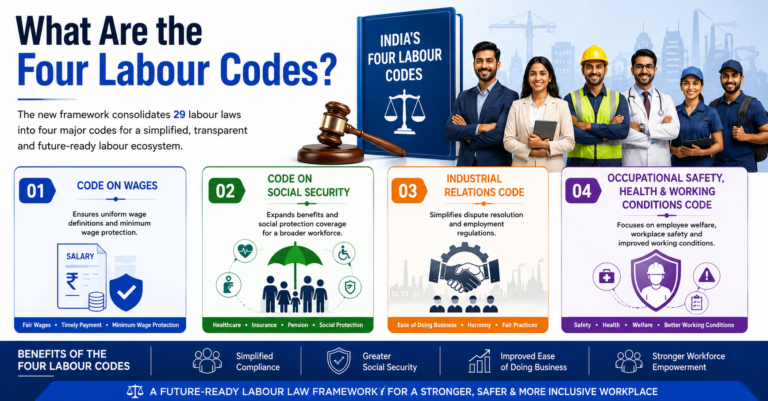
The new framework consolidates 29 labour laws into four major codes:
1. Code on Wages
:This code standardizes wage-related laws concerning:
-Minimum wages
-Payment of wages
-Bonus payments
-Equal remuneration
The most important change is the introduction of a uniform definition of wages.
2. Code on Social Security:
This code expands social security coverage and includes:
-Provident Fund (PF)
-Employee State Insurance (ESI)
-Gratuity
-Maternity Benefits
-Employee Compensation
For the first time, gig and platform workers are formally recognized..
3. Industrial Relations Code:
This code governs:
-Trade unions
-Employment conditions
-Industrial disputes
-Retrenchment procedures
Its objective is to improve employer-employee relations and streamline dispute resolution.
4. Occupational Safety, Health & Working Conditions Code:
This code focuses on:
-Workplace safety
-Employee welfare
-Working conditions
-Occupational health standards
It promotes safer and healthier workplaces across industries.
Major Changes Every Employee Should Know
Basic Salary May Need to Be 50% of CTC
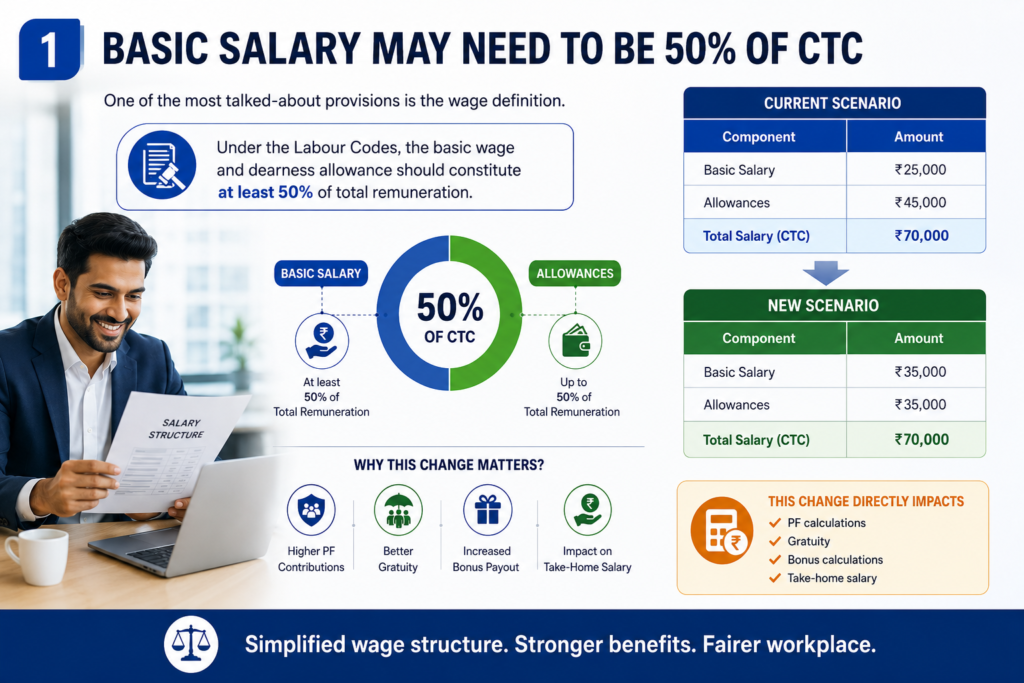
One of the most talked-about provisions is the wage definition.Under the Labour Codes, the basic wage and dearness allowance should constitute at least 50% of total remuneration.
Current Scenario
Many companies structure salaries like this:
Component Amount
Basic Salary ₹25,000
Allowances ₹45,000
Total Salary ₹70,000
New Scenario
Component Amount
Basic Salary ₹35,000
Allowances ₹35,000
Total Salary ₹70,000
This change directly impacts PF, gratuity, bonus calculations, and take-home salary.
2. Impact on In-Hand Salary
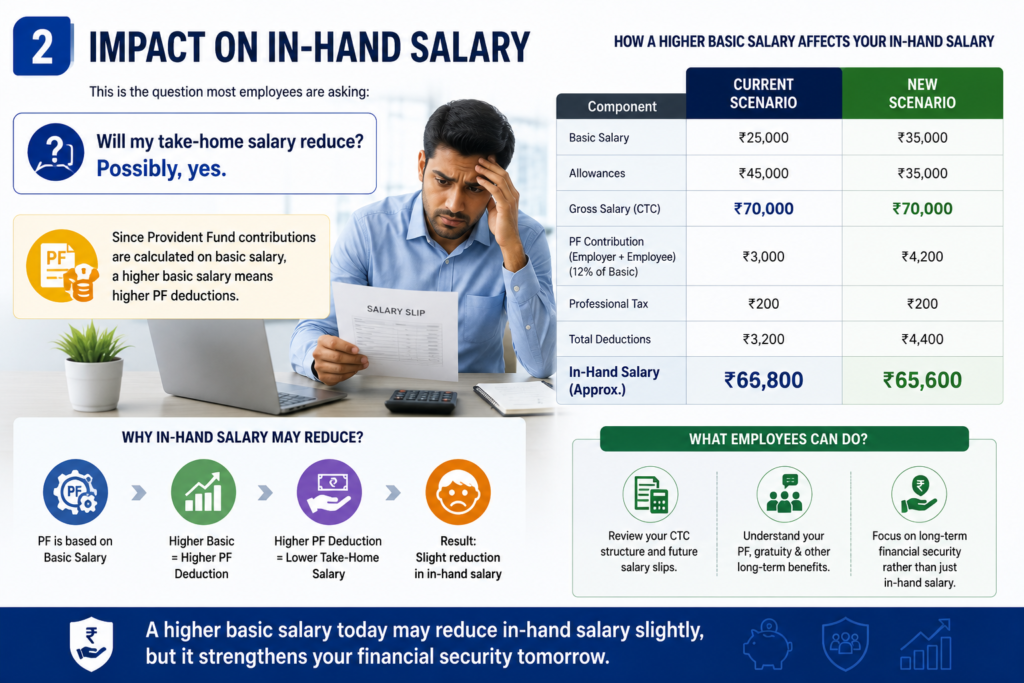
This is the question most employees are asking:
Will my take-home salary reduce?
Possibly, yes.
Since Provident Fund contributions are calculated on basic salary, a higher basic salary means higher PF deductions.
Example
BeforeMonthly Salary: ₹70,000
Basic Salary: ₹25,000
Employee PF: ₹3,000
In-Hand Salary:Higher
After
Monthly Salary: ₹70,000
Basic Salary: ₹35,000
Employee PF: ₹4,200
In-Hand Salary: Slightly Lower
What Employees Gain?
Although monthly take-home salary may reduce slightly:
-Higher PF savings
– Larger retirement corpus
– Better gratuity benefits
– Improved long-term financial security
The money is not lost—it is redirected toward future savings and benefits.
3.Major Change in Gratuity Eligibility
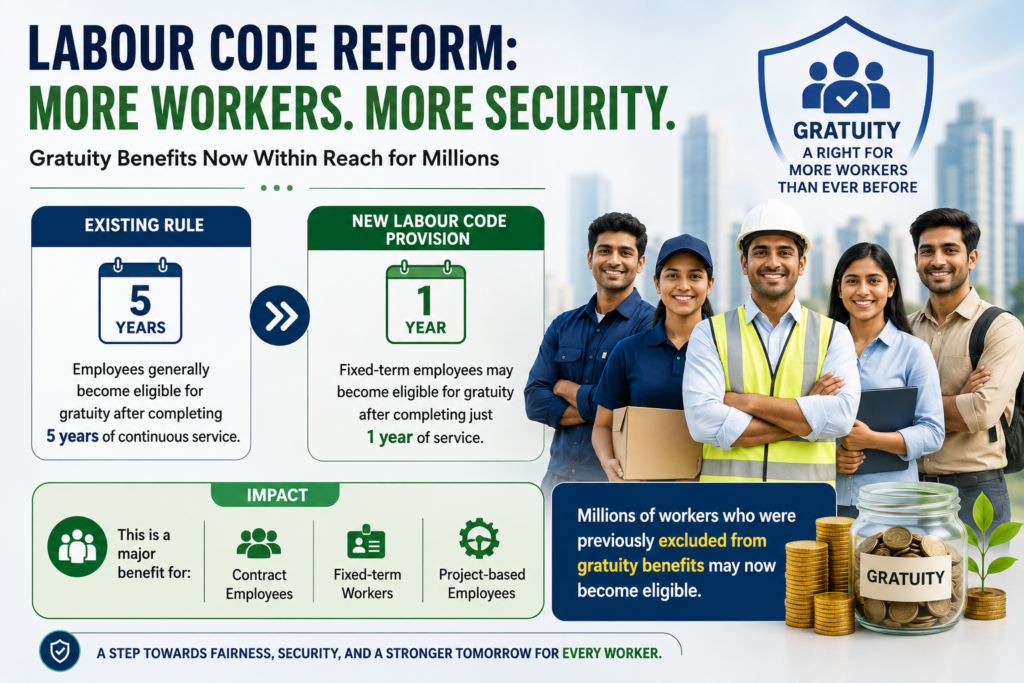
Existing Rule
Employees generally become eligible for gratuity after completing 5 years of continuous service.
New Labour Code Provision:
Fixed-term employees may become eligible for gratuity after completing just 1 year of service.
Impact
This is a major benefit for:
– Contract employees
– Fixed-term workers
– Project-based employees
Millions of workers who were previously excluded from gratuity benefits may now become eligible.
5. Bonus Calculations Become More Structured
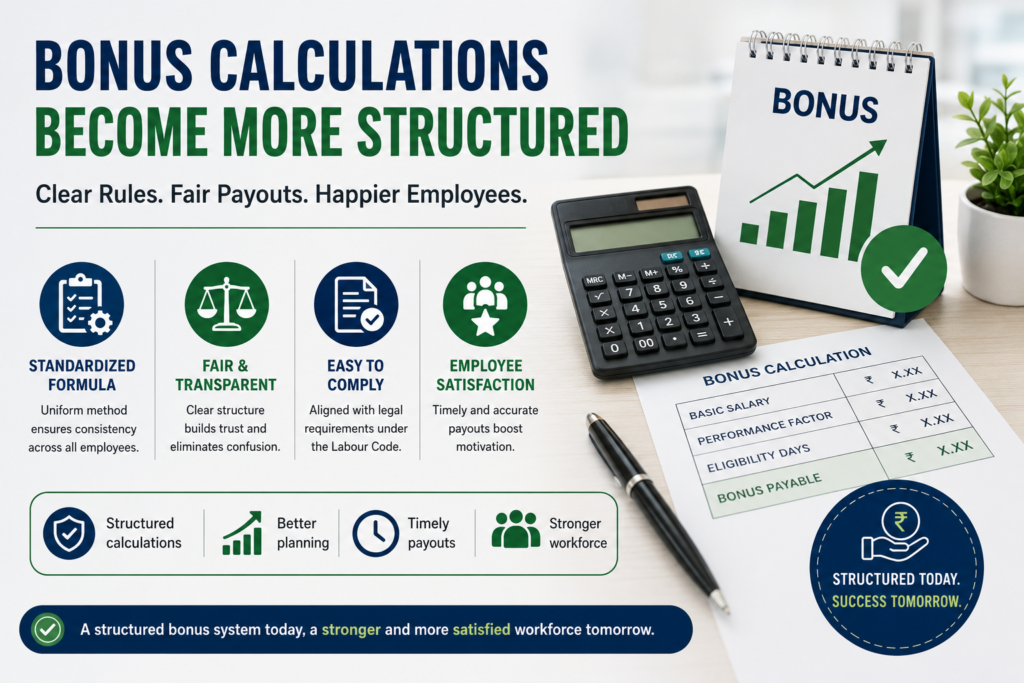
Bonus payments will also be influenced by the new wage definition.
What Changes?
Organizations will need to:
-Review payroll structures
-Ensure proper bonus calculations
-Maintain accurate compliance records
-Employee Benefits Greater transparency
-Standardized calculations Reduced disputes
6. Working Hours: Myth vs Reality
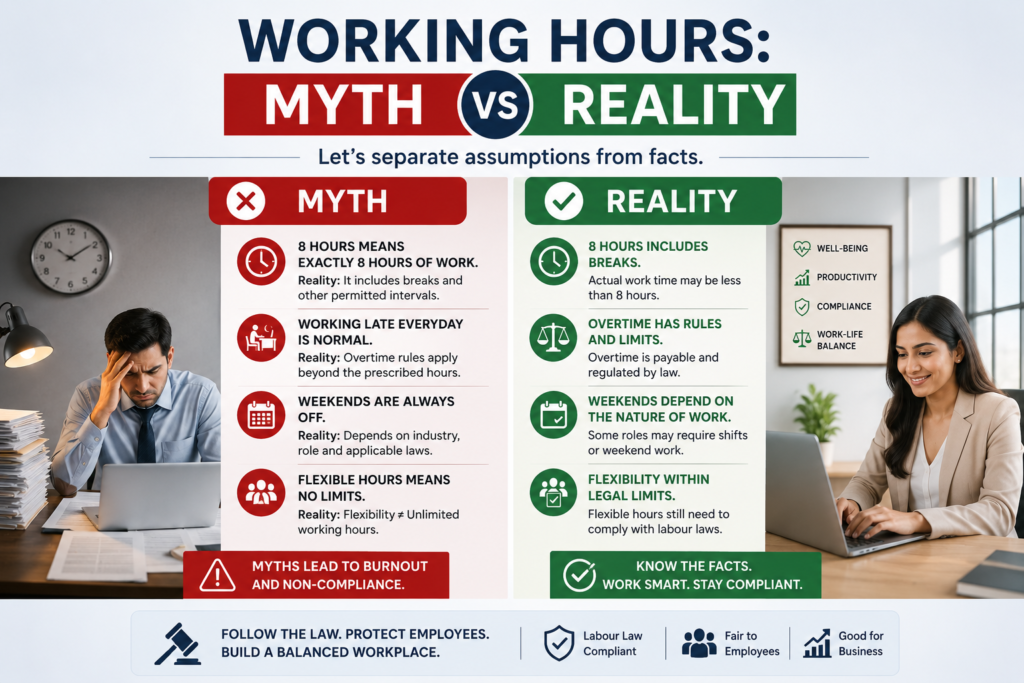
One of the biggest misconceptions about the Labour Codes is that employees will have to work 12 hours every day.
RealityThe Labour Codes continue to maintain:
Maximum 48 Working Hours Per Week
Employee protections regarding:
-Overtime
-Weekly offs
-Rest intervalsremain in place.
Possible Work Arrangements
Organizations may choose different scheduling models such as:
– 8 Hours × 6 Days
– 9 Hours × 5 Days
– 12 Hours × 4 Days (where permitted)
However, overtime rules and weekly limits must still be followed.
What This Means:
– Greater flexibility for employers
– Better work scheduling
– Potential for compressed workweeks
– Continued employee protections
7.Social Security Benefits for Gig & Platform Workers

This is one of the most revolutionary changes introduced by the Labour Codes.
For the first time, gig and platform workers are recognized under labour regulations.
Covered Workers Food delivery partners
-Ride-sharing drivers
– Freelancers Platform-based service providers
– Potential Benefits
The government may introduce welfare schemes covering:
-Health insurance Accident insurance Social security benefits Retirement support Financial assistance programsThis could significantly improve the financial security of millions of workers.
Impact on Employers
The new Labour Codes will require organizations to review salary structures, update payroll processes, and strengthen compliance practices. Employers may need to revise CTC structures, recalculate PF, gratuity, and bonus components, update employment contracts, and ensure HRMS and payroll systems are aligned with the new regulations.
What HR Professionals Need to Learn
As labour laws evolve, HR professionals must develop expertise in recruitment, payroll management, labour compliance, statutory requirements, HRMS, ATS, and workforce planning. These skills will be critical for managing modern HR operations and ensuring organizational compliance.
Key Takeaways
For Employees
– Higher PF contributions and retirement savings
– Potentially lower in-hand salary
– Better gratuity and social security benefits
For Employers
– Payroll and salary structure revisions
– Increased compliance responsibilities
– HRMS and policy updates
For HR Professionals
– Growing demand for payroll and compliance expertise
– Increased importance of HR technology skills
– Better career opportunities in HR operations
Conclusion
India’s Labour Law Overhaul is reshaping payroll, employee benefits, compliance, and workforce management. While employees may experience slight changes in take-home pay, they could benefit from stronger long-term financial security. For employers and HR professionals, adapting to these reforms will be essential for staying compliant and future-ready.
About TalentMintX
Learn. Practice. Grow.TalentMintX empowers aspiring HR professionals through practical training, mentorship, real-world projects, and HR technology exposure, helping them build job-ready skills for the modern workplace.